


“I Thought Home Automation Was Only for Rich People”
This is probably the most common statement we hear when speaking with homeowners. Many people assume that home automation requires:
- A luxury villa
- A newly built house
- A six-figure budget
- Extensive renovations
- A complete smart home installation
As a result, they dismiss the idea before even exploring what modern home automation actually costs. The truth is very different.
In 2026, home automation has become significantly more accessible than most people realize. In fact, many homeowners can start their smart home journey for less than the cost of a new smartphone.
So how much does home automation really cost in Sri Lanka?Let’s break it down.
The Biggest Mistake People Make
When people think about home automation, they often imagine automating an entire house at once. That’s like assuming you need to buy every appliance in a kitchen before you can start cooking.
The reality is that modern home automation is modular. You can start with a single room. A single switch. Even a single problem you want to solve.
Most homeowners don’t build a smart home overnight.They build it gradually.
What Are You Actually Paying For?
Home automation isn’t a single product. It’s a collection of technologies that work together.The cost depends on:
- Number of Devices: A home with one smart switch will naturally cost less than a home with twenty switches.
- Type of Technology: Different devices provide different levels of functionality.
- Automation Features: Simple remote control costs less than advanced automation scenarios involving multiple devices.
- Size of Property: Larger homes generally require more devices and more coverage.
- Future Expansion Requirements: Some homeowners install a foundation that allows them to expand later.
Entry-Level Home Automation
For most homeowners, the ideal starting point is a smart switch.
A smart switch allows you to:
- Control lights remotely
- Create schedules
- Manage lighting from your phone
- Automate basic daily routines
This is where many people first experience the benefits of automation.
Instead of wondering whether you left a light on, you can simply check and control it remotely. This entry-level approach allows homeowners to experience smart living without committing to a large project.
The “One Room at a Time” Approach
One of the smartest ways to adopt home automation is gradually.
For example:
- Phase 1: Living Room: Automate the lights used most frequently.
- Phase 2: Master Bedroom: Add convenience where you start and end every day.
- Phase 3: Outdoor Lighting: Introduce automatic schedules and security lighting.
- Phase 4: Common Areas: Expand automation into additional spaces as required.
This approach spreads investment over time while delivering immediate benefits.
What Can You Get for Different Budgets?
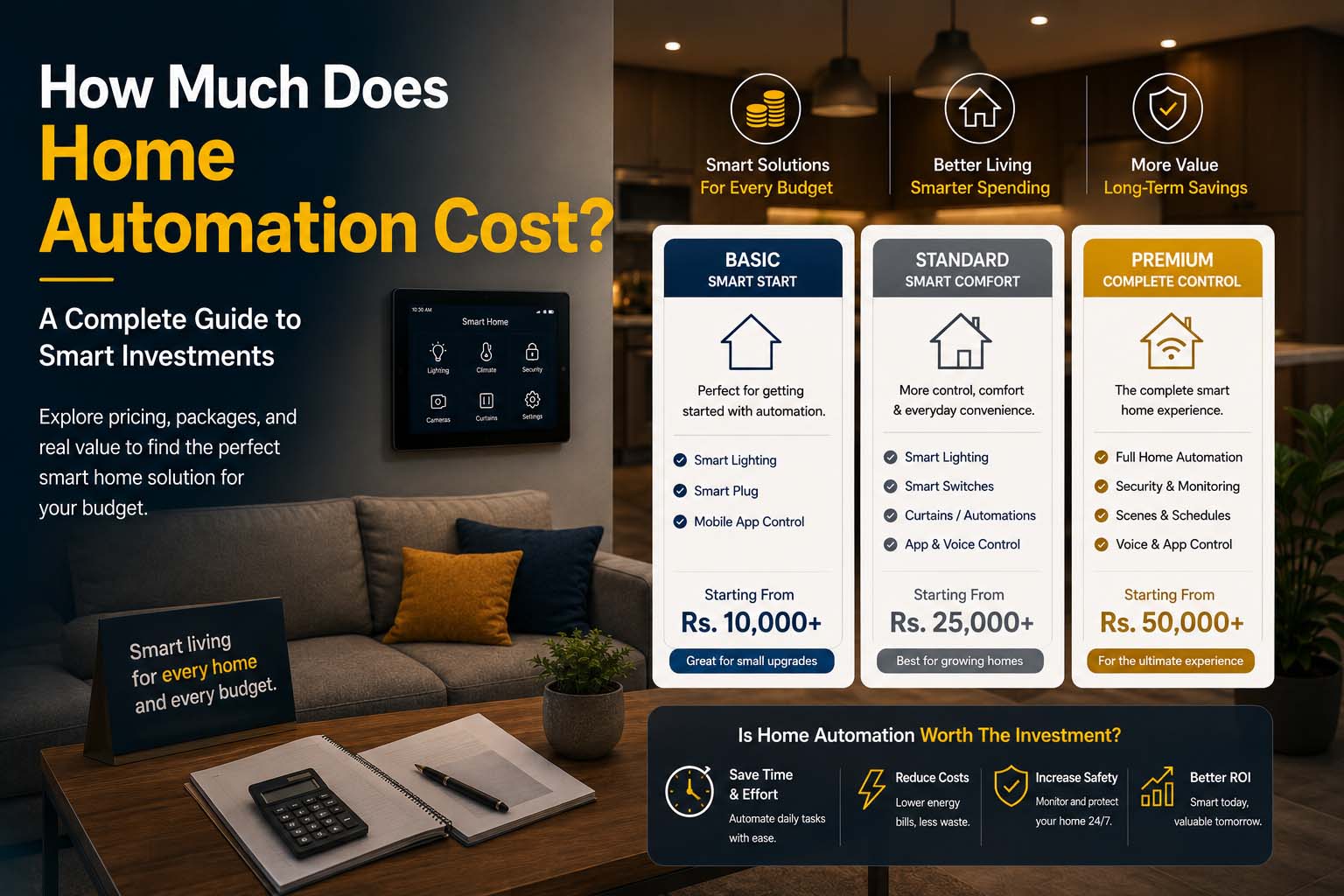
Around Rs. 10,000+
Ideal for homeowners who want to experience automation for the first time.Possible applications:
- Single smart switch
- Basic remote lighting control
- Scheduling features
- Smartphone access
Around Rs. 25,000 – Rs. 50,000+
Suitable for automating multiple areas of the home. Possible applications:
- Multiple smart switches
- Room grouping
- Advanced schedules
- Custom scenes
Rs. 50,000 and Above
For homeowners looking to create a broader smart home experience.
Possible applications:
- Multi-room control
- Advanced automation routines
- Integration with additional smart devices
- More comprehensive smart home functionality
The important point is that every homeowner can enter the smart home world at a level that matches their budget.
Why Cheap Isn’t Always Better
When researching smart home products online, you’ll likely encounter extremely low-cost devices.
At first glance, they may seem attractive. However, home automation is something you interact with every day. Reliability matters.
A quality smart switch should:
- Operate consistently
- Respond quickly
- Maintain stable connectivity
- Support future expansion
- Integrate into a larger ecosystem
Choosing the cheapest option often leads to frustration, replacement costs, and inconsistent performance. Good automation should feel invisible—it should simply work.
Home Automation vs Traditional Electrical Installations
Many homeowners compare smart switches to traditional switches and focus only on the purchase price. However, this comparison overlooks the additional value automation provides.
A traditional switch offers:
- On
- Off
A smart switch offers:
- On
- Off
- Remote access
- Scheduling
- Automation
- Scene control
- Energy management
- Future expandability
You’re not simply buying a switch. You’re adding intelligence and convenience to your home.
Does Home Automation Save Money?
One of the most common questions homeowners ask is whether automation can reduce electricity bills. The answer depends on usage habits.
Automation can help reduce waste by:
- Turning off forgotten lights
- Scheduling outdoor lighting
- Managing unnecessary device operation
- Preventing appliances from running longer than needed
For some households, these savings become noticeable over time. However, the primary value of home automation isn’t cost savings.
The biggest benefits are convenience, comfort, and peace of mind.
Is It Better to Automate During Construction?
If you’re building a new home, planning automation early can simplify installation. However, this does not mean existing homes cannot benefit.
Modern smart home solutions are designed to work in both:
- New constructions
- Existing homes
- Apartments
- Renovated properties
Many homeowners successfully upgrade their homes without major structural modifications.
The Cost of Not Automating
This may sound unusual, but it’s worth considering.
What is the cost of:
- Leaving lights on unnecessarily?
- Worrying whether devices were switched off?
- Walking room-to-room every night checking switches?
- Returning home because you’re unsure about something?
These inconveniences seem small individually. But over years, they become part of daily life. Automation addresses these recurring frustrations.
Home Automation Is Becoming More Affordable Every Year
Just like smartphones and internet access, home automation has become more accessible over time.Technology that once appeared only in luxury properties is now available to ordinary homeowners.
This shift is changing how people think about smart homes. Instead of asking:
“Can I afford home automation?”
More homeowners are asking:
“Which part of my home should I automate first?”
That’s a significant difference.
Final Thoughts
Home automation in Sri Lanka no longer requires a massive budget or a luxury property. The modern approach is simple:
- Start small.
- Solve a real problem.
- Expand gradually.
Whether your goal is remote control, convenience, energy management, or peace of mind, there are solutions available for a wide range of budgets.
The smartest homeowners aren’t necessarily the ones automating everything. They’re the ones who identify everyday frustrations and use technology to eliminate them.
And sometimes, that journey starts with a single smart switch.
Ready to Explore Affordable Home Automation?
The best smart home isn’t necessarily the most expensive one. It’s the one that improves your daily life.
Whether you’re looking to automate a single room or gradually create a fully connected home, today’s technology makes smart living more accessible than ever before.